
Updated: February 28, 2026 | By Dan Milburn
I’ve spent the last 18 years dismantling, repairing, and—more often than I’d like to admit—throwing away torch lighters. If there is one thing I’ve learned from clearing out hundreds of clogged burners, it’s this: Your “broken” lighter isn’t actually broken; it’s just constipated. That’s why I’ve created and am updating this guide to the best butane fuel for torch lighters.
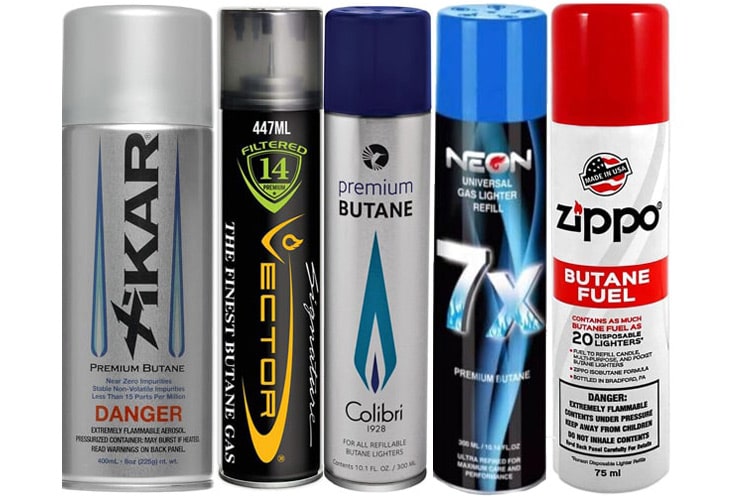
The culprit? Impurities. Cheap butane contains oils and contaminants that bake onto your lighter’s internal jets, creating a crust that eventually kills the valve. After nearly two decades of testing a ton of different brands on the market, I’ve narrowed down the field to the only five brands I trust in my own collection.
Disclosure: LighterPoint.com is a participant in the Amazon Services LLC Associates Program, as well as other affiliate programs, designed to provide a means for us to earn fees by linking to Amazon.com and affiliated sites at no extra cost to you. Please see the Affiliate Disclosure for more details.
The Best Butane Fuel I Trust And Use
| Fuel Brand / Best For | Purity Level | My Thoughts |
| Colibri Premium / Luxury & High-End Lighters | 99.9994% (9x) | The gold standard. Under 6ppm impurities. I use this in my S.T. Duponts. |
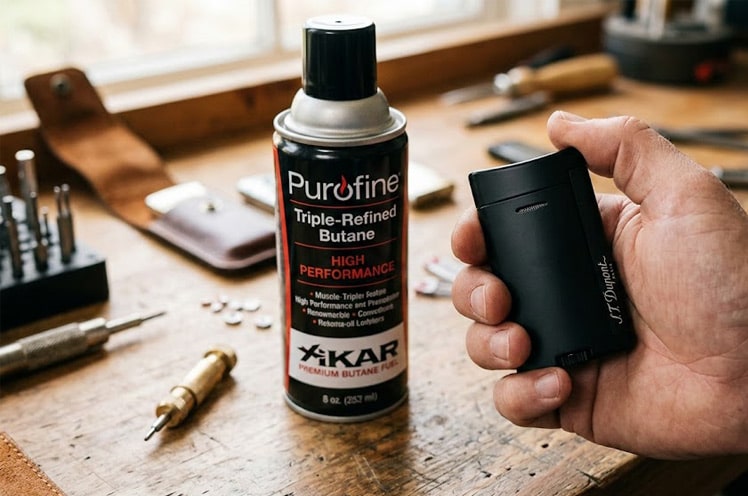
| Xikar Purofine / Daily Cigar Smokers | High Purity (3x) | Engineered specifically for cigar torches. Extremely reliable across all altitudes. |
| Vector KGM / Vintage & Finicky Jets | Ultra-Filtered (14x) | If your lighter is prone to clogging, this 14x filtered gas is the “cleanest” insurance policy. |
| Neon 7x / Best Budget Value | Multi-Refined (7x) | The best “cheap” gas. Comes with 5 adapters—perfect for weird vintage lighters. |
| Zippo Premium / Emergency or Local Buy | Triple-Refined | Reliable and available everywhere. Good for budget torches like Vertigo or Blazer. |
The Science of “Gunk”: Why $5 Gas Ruins $100 Lighters
In my 18 years of fixing torches, I’ve seen the same “death spiral” hundreds of times. Most people think butane is just “gas,” but it’s actually a complex hydrocarbon.
The Invisible Killer: Heavy Ends Low-quality butane isn’t just “dirty”; it contains “heavy ends”—oily residues like pentane and hexane that don’t evaporate. When you click your igniter, the butane turns to gas, but these oils stay behind. They bake onto the tiny needle-valve of your burner, eventually forming a microscopic “crust” that causes:
- Flame Sputtering: Your lighter looks like it’s gasping for air.
- Lazy Flame: Even on the “High” setting, the flame is weak.
- The “Hiss”: Your lighter leaks gas because the “gunk” prevents the valve from closing fully.


For more info on fixing common lighter problems, see my guide on torch lighter troubleshooting or common flame problems.
How to Tell if Your Butane is Actually Clean
You can’t always trust a label that says “14x Refined.” In my shop, I use two quick tests to see if a brand is actually pure or just clever marketing. If you’ve got a mystery can in your drawer, try these before putting it in your lighter.
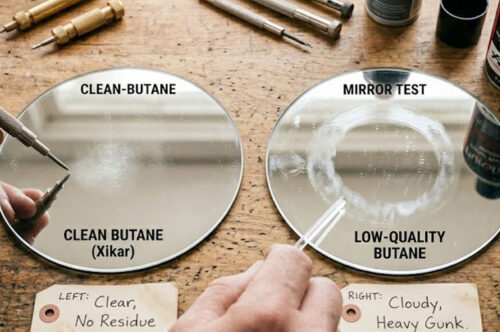
The Mirror Test
This is the fastest way to see the “heavy ends” (oily residues) that clog your jets.
- The Test: Hold a clean, room-temperature mirror and spray a 2-second burst of butane directly onto the glass from about 2 inches away.
- What to Look For: The liquid will evaporate almost instantly. Once it’s gone, look at the glass under a bright light.
- Good Butane: Leaves absolutely nothing behind. The glass should be crystal clear.
- Bad Butane: Leaves a white, cloudy ring or an oily “ghost” smudge. That smudge is exactly what will bake onto your lighter’s internal needle valve.
The “Scent” Check
Pure butane (N-Butane) is naturally odorless. However, manufacturers add “stenchants” (mercaptans) so you can detect leaks.
The Difference: High-quality fuels like Colibri or Xikar use the bare minimum of these additives. If you spray a bit and it smells like a rotten egg or a skunk for more than a few seconds, it’s a sign of a lower-grade refinement process. You want a fuel that “flashes off” clean with no lingering chemical stink.
My Top 5 Picks: The Best Butane Fuels for Torch Lighters
Colibri Premium
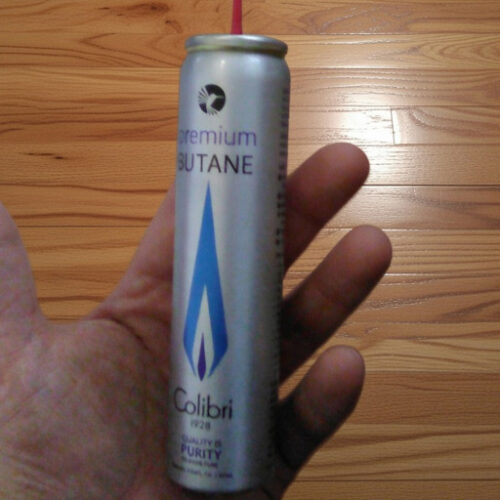
I don’t care what the marketing on the can says—my experience with Colibri comes down to the valves. I’ve used this exclusively in my S.T. Dupont and high-end Colibri lighters for years.
Cost: About $16
How I Use It: I use Colibri butane for my really classy lighters when I am going to hit a cigar bar or night out with my wife. A can will last me quite a while, as it is my “reserved” brand. It is pricey for the size, but for years have been happy with how good it is.
Check It Out At Amazon
- The “Zero Residue” Reality: Colibri is processed to under 6 parts per million (ppm) of impurities. When you’ve spent an afternoon trying to unclog a $200 lighter with a needle and compressed air, you realize that paying a few extra bucks for 6ppm gas is the cheapest insurance policy you can buy.
- Best For: Luxury lighters, premium cigars, and anyone who hates cleaning their burner jets.
- Pro Tip: The nozzle on the Colibri is very precise, but it can be finicky with budget plastic lighters. Make sure you’re pressing straight down.
Xikar Purofine
This is my absolute go-to fuel for all my torch lighters. XIKAR Purofine has extremely low levels of impurities. According to the Xikar website, each can only 15 parts per million when it comes to impurities. Xikar Purofine is 3x refined to ensure that it is free of water and other contaminants. I think you’d agree that Xikar Purofine is definitely worth a shot in your torch lighter. In my opinion, this is the best butane for torch lighters.
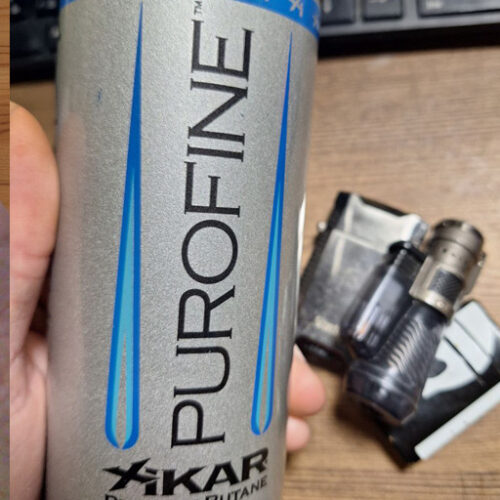
Cost: About $13
How I Use It: Even though Purofine is a bit pricey, I will use it in ALMOST ALL my torch lighters. From my daily use lighters to collectable lighters, and even cool novelty lighters will get a quick fill of Purofine, and I don’t ever have problems.
Check It Out At Amazon.com
- Altitude Performance: I’ve taken torches filled with Purofine on hiking trips where cheaper gas literally wouldn’t ignite.
- The “Magic” Fix: In the repair community, we often joke that Xikar is “adrenaline for lighters.” I’ve seen lighters that were sputtering on gas-station butane “wake up” almost instantly after a purge and a fill of Purofine.
- Best For: All butane lighters, high-altitude use, and Xikar-branded torches.
Vector KGM 14x
Vector claims “14x filtration.” Is it twice as good as 7x? Probably not. But for vintage butane lighters (the ones from the 70s and 80s with tiny, irreplaceable internal parts), I almost never use anything else.
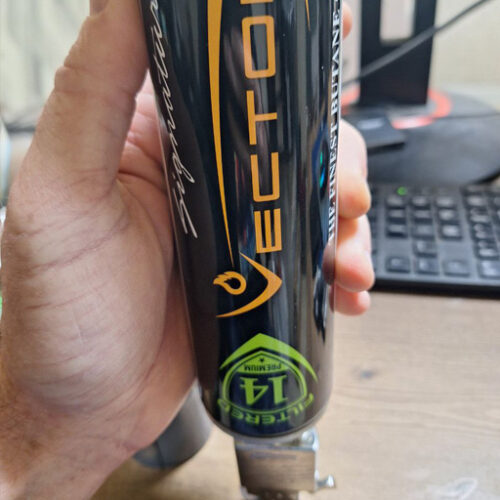
Cost: About $11 per can
How I Use It: For the most part, I use Vector butane for vintage lighters. One of the main reasons for this is that their valve stems are metal, and with the valve adapters under the cap, I don’t have a problem filling any of my older lighters.
Check It Out At Amazon.com
- The “Filtering” Obsession: Vector is incredibly aggressive with their filtration. If you have a lighter that is “sentimental” and you can’t afford a clog, this is the premium choice.
- Bulk Value: You can often find Vector in large 12-packs on Amazon, which actually makes it cheaper per ounce than buying single cans of “lesser” gas.
- Best For: Vintage collections and high-frequency users who buy in bulk.
Neon 7x
Don’t let the lower price point fool you. Neon 7x is surprisingly clean. But the real reason I keep a can of this on my workbench is the cap full of adapters.
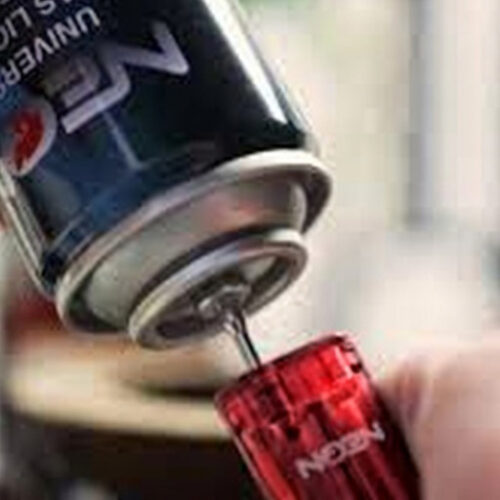
Cost: About $8 per can
How I Use It: For a long time, I used the Neon 11X butane, and one day ended up ordering 7X by mistake. After going through a 6 pack of the 7X I found it to be WAY better than expected. For the most part, this is the butane I use for mid-range plastic refillable lighters.
Check It Out At Amazon.com
- The Adapter Kit: Neon comes with a set of 5 different plastic tips. If you have an old Ronson, a Japanese novelty lighter, or a culinary torch with a weird recessed valve, one of these tips will fit.
- Performance: It’s 7x refined, which is more than enough for 99% of modern torch lighters.
- Best For: People with a variety of different lighter brands or hobbyist torches.
Zippo Premium Butane (The “Everywhere” Reliable)
Zippo is the most accessible brand on this list. If you run out of fuel on a Saturday night and need to hit a local shop, this is the one you look for.
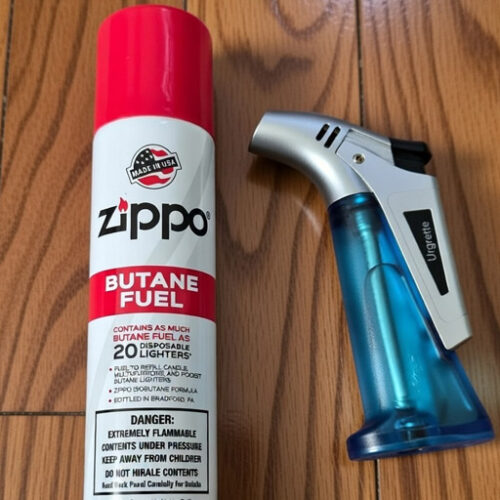
Cost: About $5 a can
How I Use It: For the most part, I use Zippo butane for troubleshooting lighters that end up in my shop. I have no complaints, and it works well enough, but not good enough to use in my hiqh quality torches.
Check It Out At Amazon.com
- Triple-Refined Standard: Zippo is triple-refined, which puts it ahead of the “black label” generic cans that clog lighters. While it might not have the 6ppm purity of Colibri, it’s a solid, dependable fuel for 90% of the lighters on the market.
- The “Insert” Specialist: Since Zippo launched their own line of butane torch inserts, they’ve tightened up their quality control. I’ve found that using Zippo fuel in Zippo-branded torch inserts provides the most consistent strike-to-light ratio.
- Best For: Zippo torch inserts, utility/candle lighters, and anyone who wants a “Made in the USA” product they can find locally.
- Pro Tip: Zippo cans often have a slightly shorter nozzle. If you’re filling a lighter with a deeply recessed valve (like some luxury brands), you might need to press harder to get a proper seal without leaking gas.
How to Refill Without Ruining Your Torch
If you just jam a butane can into your lighter and hope for the best, you’re doing it wrong. Following these four steps will literally double the lifespan of your torch’s internal seals and valves.
Step 1: The Cold Purge (Crucial)
Before adding new fuel, you must remove the old air. As you use a lighter, air seeps into the tank. If you don’t “bleed” it, that air takes up space where the gas should be, leading to weak flames and “hiccups.”
- The Fix: Turn your flame adjuster to the lowest setting (-). Hold the lighter upside down (away from your face) and press the refill valve with a small screwdriver or a [dedicated bleeding tool].
- The Goal: Keep pressing until you no longer hear a “hissing” sound. If it’s silent, the tank is truly empty and ready for fresh fuel.
Step 2: The Shake and Chill
Butane is a propellant-based gas. Shake your refill canister for about 5-10 seconds to “prime” the mixture.
- Pro Tip: If your lighter is warm from being in your pocket, let it sit on a counter for 5 minutes first. Cold lighters accept fuel much more efficiently than warm ones.
Step 3: The Upside-Down Fill
Always keep both the lighter and the butane can completely upside down. This ensures you are injecting liquid butane, not just air propellant.
- The Action: Press the nozzle into the valve in 3-second bursts. Usually, 2 or 3 bursts are enough.
- How to tell it’s full: You’ll see a tiny bit of “spray back” or leakage around the nozzle. That’s your sign to stop immediately. Overfilling can cause the seals to leak.
Step 4: The 5-Minute Rule (Don’t Skip This!)
This is the mistake 90% of people make. Refilling causes the temperature of the lighter to drop rapidly (physics!). Cold butane doesn’t vaporize well.
- The Rule: Let the lighter sit for at least 5 to 10 minutes to reach room temperature before you try to light it. If you try to light it immediately, you’ll get a “lazy” flame or no ignition at all, which can wear out your piezo igniter.
What I put in my Maintenance Kit:
To keep my collection in top shape, I keep these three things on my workbench. They save me from having to buy new lighters every year:
- Compressed Air: For blowing dust out of the burner jets.
- Precision Screwdriver: For adjusting the flame dial.
- Brass Bleeding Tool: Much safer for the valves than a ballpoint pen.
Best Butane Fuel for Torch Lighters FAQs
I get these questions constantly from people who think their lighters are broken. Usually, the fix is just a change to one of the best butane fuel for torch lighters or a technique on cleaning.
Why is my torch lighter, hissing after I refill it?
If you hear a faint hiss right after refilling, it’s usually one of two things:
- A Lazy Valve: Sometimes the refill valve gets stuck in the open position slightly. Give the refill stem a quick tap with a small screwdriver to seat it.
- Temperature Pressure: The tank is extremely cold after a refill, which can cause the gas to contract and expand unevenly. Wait 10 minutes for the lighter to reach room temperature; the hissing often stops on its own.
- See our torch lighter hissing guide if these steps don’t help
Can I use regular (unrefined) butane in my torch?
Technically yes, but practically no. Standard butane found in cheap lighters or camping stoves contains heavy oils and contaminants. While a soft-flame lighter (like a Bic) can handle this, the microscopic jets in a torch lighter will clog almost instantly. Using unrefined gas in a torch is the fastest way to turn a $100 lighter into a paperweight.
Why does my lighter struggle to ignite at high altitudes?
Oxygen is thinner at higher altitudes, which messes with the fuel-to-air ratio needed for combustion.
- The Fix: Turn your flame adjustment dial slightly toward the (+) side. This pushes more fuel through the jet to compensate for the lack of oxygen. I’ve found Xikar Purofine to be the most consistent brand for mountain trips.
Is 14x Refined actually better than 3x Refined?
In my experience, anything over 5x refined is largely marketing. The most important metric isn’t how many times it was filtered, but what was removed. Brands like Colibri focus on removing the specific paraffin waxes and oils that cause clogs. As long as you stick to a Premium label from a trusted brand, the 14x vs 5x won’t make a noticeable difference in your lighter’s performance.
How often should I refill my torch lighter with butane?
Refill every 1-2 weeks for regular use, depending on your lighter’s capacity (e.g., Xikar lighters hold more than Vertigo). Check fuel windows.
Why is my torch lighter sputtering after refilling?
Sputtering is often due to air pockets or low-quality butane. Learn fixes in our Why won’t my torch lighter stay lit guide.
Bottom Line: Don’t Blame the Lighter When Butane is the Problem
After years of clearing out clogged valves and reviving “dead” torches, the evidence is clear: Your lighter is only as reliable as the fuel you put in it. If you’re carrying a high-end S.T. Dupont or a premium Colibri torch, don’t gamble—stick with Colibri Premium or Vector 14x.
For your everyday carry (EDC) and Zippo inserts, Xikar Purofine or Zippo Premium will provide years of service without the “gunk” build-up of generic gas.
Remember the simple protocol: Purge, Fill, and Wait. Taking those extra five minutes to let your lighter reach room temperature is the difference between a first-strike ignition and a frustrated afternoon.
Still having trouble with your flame or have questions about the best butane fuel for torch lighters? Leave a comment below with your lighter brand and the fuel you’re using—I’ve probably fixed one just like it.

- How to Clean a Torch Lighter - July 12, 2025
- Best Torch Lighter Brands for Cigars in 2025 - July 3, 2025
- Best Pocket Torch Lighters In 2025 - June 30, 2025