

Updated: May 23, 2026 | By Dan Milburn
I’ve spent the last 18 years dismantling, repairing, and—more often than I’d like to admit—throwing away torch lighters. If there is one thing I’ve learned from clearing out hundreds of clogged burners on my workbench, it’s this: Your “broken” lighter isn’t actually broken; it’s just constipated.
The culprit? Impurities. Cheap, low-quality butane contains heavy oil residues and chemical contaminants that bake onto your lighter’s internal micro-jets. Over time, this creates a crust that suffocates the gas flow, kills the ignition valve, and leaves you with a sputtering flame.
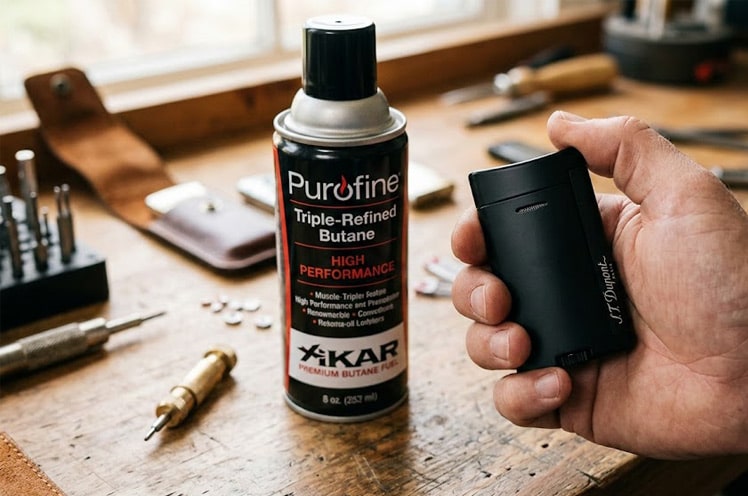
After nearly two decades of testing every major high-quality butane fuel brand on the market, I’ve narrowed down the field. Whether you need a premium butane refill for a high-end cigar torch, a budget-friendly option for a workshop jet, or a high-purity gas that won’t ruin your gear, these are the only five brands I trust in my personal collection.
The 30-Second Best Butane Summary (TLDR)
If you are in a rush, here is the short answer on how to protect your gear and choose the right fuel:
The Refill Protocol: To double the life of any lighter, always Purge the empty air pressure out first, Fill with the canister completely upside down, and Wait 10 minutes for the tank to return to room temperature before striking.
The Golden Rule: Your torch lighter is only as reliable as the gas you put in it. Low-quality butane contains heavy end oils that bake onto internal valves, causing permanent clogs, hissing leaks, and lazy flames.
Top Premium Pick: Colibri Premium is the gold standard for high-end cigar torches and luxury brands, refined to under 6 ppm of total impurities.
Top Daily Pick: Xikar Purofine is the absolute best horse for daily carry torches, offering near-zero contaminants and flawless high-altitude performance.
Disclosure: LighterPoint.com is a participant in the Amazon Services LLC Associates Program, as well as other affiliate programs, designed to provide a means for us to earn fees by linking to Amazon.com and affiliated sites at no extra cost to you. Please see the Affiliate Disclosure for more details.
The Refinement & Purity Comparison Table
| Brand | Refinement Level/ PPM Impurities | Best Application |
| Colibri Premium View on Amazon | 9x Refined/ Under 6 ppm | Luxury Torches & High-End Cigar Lighters |
| Xikar Purofine View on Amazon | 3x Refined/ Under 15 ppm | Daily Cigar Smokers & High Altitude |
| Vector KGM View on Amazon | 14x Refined/ Ultra-Filtered | Finicky Vintage Jets & Metal Valve Stems |
| Neon 7x View on Amazon | 7x Refined/ Multi-Refined | Budget Value & Weird recessed Valves |
| Zippo Premium View on Amazon | Triple-Refined/ Standard Clean | Zippo Torch Inserts & Emergency Buys |
The Science of Gunk: Why Cheap Gas Ruins Premium Lighters
In my 18 years of fixing torches on my workbench, I’ve watched the exact same “death spiral” play out hundreds of times. Most people assume that butane is just a generic gas, but it’s actually a complex hydrocarbon that requires aggressive filtration to be safe for micro-burners.
The Invisible Killer: Heavy Ends
Low-quality butane isn’t just dusty; it contains “heavy ends.” These are oily, molecular residues like pentane and hexane that completely fail to evaporate during combustion.
When you click your igniter, the pure N-butane turns to gas and ignites, but these heavy oils stay behind. They bake directly onto the microscopic needle-valve of your burner cup, eventually forming a dark, crusty varnish that causes:
- Flame Sputtering: Your lighter gasps, coughs, and spits orange fire like it’s fighting for air.
- A Lazy Flame: Even when you crank the adjustment wheel all the way to maximum (+), the flame remains weak, short, and yellow.
- The Permanent Hiss: The oily crust builds up so thick that the internal valve can no longer snap fully shut, causing your expensive gas to slowly leak out when the lighter is just sitting in your drawer.
- If you’re in the market for a new lighter, check out my guide on the best torch lighter brands to give you a little help finding the perfect lighter.
Quite a few people over the years have asked about the differences between butane brands and whether it all really matters. I can say with confidence that it does. Check out my short guide if you want to know more about the questions: Does butane quality matter for torch lighters?


For more info on fixing common lighter problems, see my guide on torch lighter troubleshooting.
Debunking the Filtration Myth: 5x vs 7x vs 11x vs 14x Butane
Walk into any smoke shop or browse Amazon, and you’ll see cans boasting “11x Refined” or “14x Ultra-Filtered.” It sounds impressive, but here is the truth from a repair perspective: The “X” rating is largely unregulated marketing. There is no universal standard for what constitutes a single filtration cycle.
What actually matters isn’t how many times the gas was run through a basic filter, but what specific impurities were left behind.
Premium brands like Colibri and Xikar don’t just chase high numbers on a label; they focus on removing the specific paraffin waxes and heavy oils that lock up micro-jets. As a general rule of thumb, any legitimate brand that is at least 5x refined is perfectly clean enough for daily use. Buying “11x” or “14x” from an off-brand gas station canister won’t save your lighter if their base refinement process allows heavy-end oils to slip through.
How to Tell if Your Butane is Actually Clean
You can’t always trust a label that says “14x Refined.” In my shop, I use two quick tests to see if a brand is actually pure or just clever marketing. If you’ve got a mystery can in your drawer, try these before putting it in your lighter.
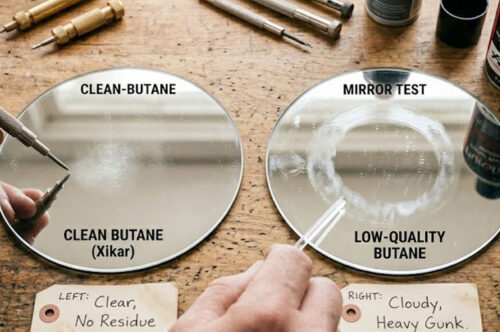
The Mirror Test
This is the fastest way to see the “heavy ends” (oily residues) that clog your jets.
- The Test: Hold a clean, room-temperature mirror and spray a 2-second burst of butane directly onto the glass from about 2 inches away.
- What to Look For: The liquid will evaporate almost instantly. Once it’s gone, look at the glass under a bright light.
- Good Butane: Leaves absolutely nothing behind. The glass should be crystal clear.
- Bad Butane: Leaves a white, cloudy ring or an oily “ghost” smudge. That smudge is exactly what will bake onto your lighter’s internal needle valve.
The “Scent” Check
Pure butane (N-Butane) is naturally odorless. However, manufacturers add “stenchants” (mercaptans) so you can detect leaks.
The Difference: High-quality fuels like Colibri or Xikar use the bare minimum of these additives. If you spray a bit and it smells like a rotten egg or a skunk for more than a few seconds, it’s a sign of a lower-grade refinement process. You want a fuel that “flashes off” clean with no lingering chemical stink.
The 5 Butane Fuels I Trust In My Lighters
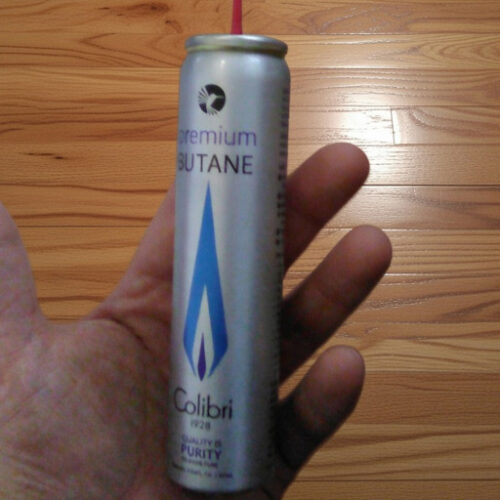
1. Colibri Premium Butane
I don’t care what the marketing on the side of a can says—my loyalty to Colibri comes entirely down to the health of my ignition valves. I’ve used this fuel exclusively in my high-end luxury torches and S.T. Dupont collections for years without a single clog.
Cost: About $16
Purity Level: 99.9994% Pure (Processed to under 6 Parts Per Million of impurities)
How I Use It: This is my “reserved” fuel. Because it’s a bit pricier for the size, I save it for my premium cigar lighters when heading out to a cigar bar. A single can lasts a long time when kept for your best gear.
- The Verdict: If you have spent an afternoon trying to save a $200 lighter with compressed air, paying a few extra dollars for 6ppm gas is the cheapest insurance policy you can buy.
- Pro Tip: The brass fuel nozzle is incredibly precise, but it requires a perfectly straight downward press when filling budget plastic lighters to avoid side-spray.
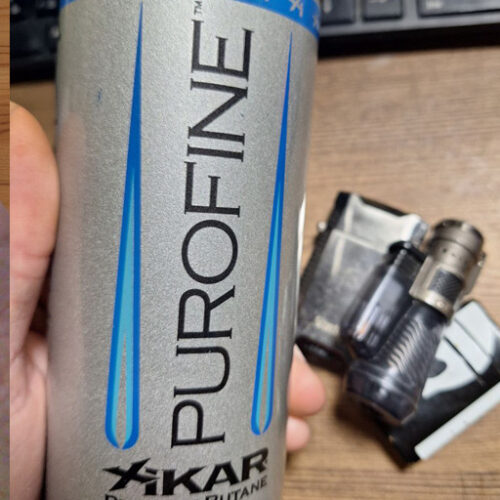
2. Xikar Purofine
This is my absolute favorite, all-around go-to fuel for daily use. Engineered specifically for high-performance cigar torches, Xikar Purofine limits its impurity levels to a strict 15 parts per million to keep your burners clean.
Cost: Around $13 per can
Purity Level: 3x Refined (High Purity, Near-Zero Contaminants)
How I Use It: This is the workhorse of my shop. From my daily pocket carry to novelty lighters, almost everything gets a regular diet of Purofine.
- The Verdict: In the repair community, we joke that Xikar fuel is “adrenaline for lazy lighters.” I’ve watched torches that were sputtering and choking on generic gas wake up almost immediately after a deep purge and a fill of Purofine. It also offers incredible altitude performance on mountain trips where thinner oxygen causes cheaper gas to fail.
- Best For: All butane lighters, high-altitude use, and Xikar-branded torches.
3. Vector KGM 14x
Vector takes an incredibly aggressive stance on filtration with their 14x gas. While it isn’t literally “twice as good” as a 7x gas, it has one major design feature that makes it a permanent fixture on my bench: a solid metal valve stem.
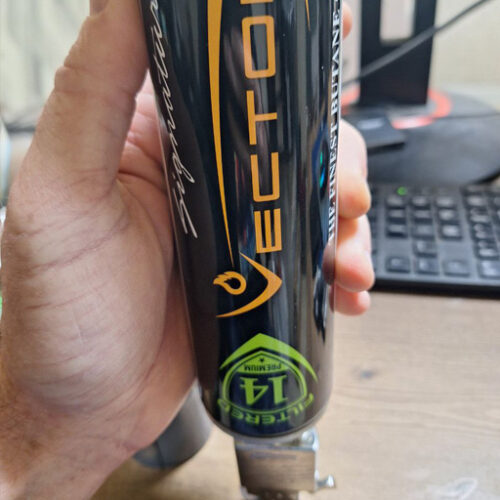
Cost: Around $11 per can
Purity Level: 14x Ultra-Filtered
How I Use It: I use Vector almost exclusively for my vintage butane lighters from the 1970s and 80s.
- The Verdict: Vintage lighters contain tiny, irreplaceable internal parts. Vector’s clean profile minimizes clog risks, and the metal stem—combined with the array of adapter tips nested under the cap—makes it incredibly easy to fill old, recessed, or weirdly shaped vintage valves without snapping a plastic tip. It’s also a great bulk buy option on Amazon.
- Bulk Value: You can often find Vector in large 12-packs on Amazon, which actually makes it cheaper per ounce than buying single cans of “lesser” gas.
- Best For: Vintage collections and high-frequency users who buy in bulk.
4. Neon 7x (The Budget Value King)
Don’t let the lower price point trick you into thinking this is junk gas. For a long time, I used Neon’s 11x butane, but after ordering a 6-pack of Neon 7x by mistake one day, I ran it through my workbench tests and found it performed significantly better than expected for a budget brand.
Cost: Around $8 per can
Purity Level: 7x Multi-Refined
How I Use It: This is the butane I rely on for mid-range refillable plastic torches, shop utility lighters, and heavy-duty workshop burners.
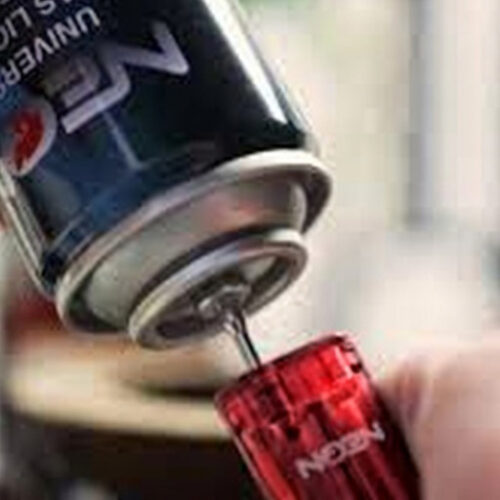
- The Verdict: Neon is the ultimate utility gas. It is clean enough to prevent clogs in 99% of modern torches, but the real seller is the cap full of 5 different plastic adapters. If you have a kitchen culinary torch, a soldering iron, or a quirky novelty lighter with a deeply recessed valve, one of these tips will give you a perfect seal.
- The Adapter Kit: Neon comes with a set of 5 different plastic tips. If you have an old Ronson, a Japanese novelty lighter, or a culinary torch with a weird recessed valve, one of these tips will fit.
5. Zippo Premium Butane
Zippo is the most accessible brand on this list. If you run out of fuel unexpectedly on a Saturday night and have to run out to a local hardware store, gas station, or corner shop, this is the reliable can you look for.
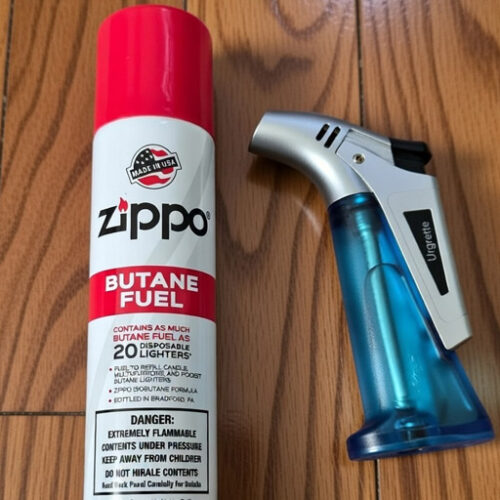
Cost: Around $5 per can
Purity Level: Triple-Refined Standard
How I Use It: I keep Zippo fuel on hand for general troubleshooting when testing cheap donor lighters that come through my shop. It works well, though I keep it away from my high-end luxury pieces.
- The Verdict: Ever since Zippo launched their own line of dual and single jet butane torch inserts, they have significantly tightened up their fuel refinement quality control. Using Zippo fuel in a Zippo-branded torch insert provides an incredibly reliable first-strike ignition.
- Pro Tip: Zippo canisters feature a slightly shorter nozzle stem. If you are filling a deeply recessed valve, you’ll need to apply firm, direct downward pressure to ensure a solid seal without spraying gas.
How to Refill Without Ruining Your Torch (My 4-Step Bench Protocol)
If you just jam a butane canister into your lighter’s fill valve and press down blindly, you are actively cutting the lifespan of your torch in half. Following this exact four-step process will protect your internal seals and ensure a flawless strike every single time.
Step 1: The Cold Purge (Absolutely Crucial)
Before you add a single drop of fresh fuel, you must bleed out the old pressure. As you use your lighter, microscopic pockets of ambient air seep into the tank. If you don’t vent this air, it creates a “vapor lock” pocket that blocks new fuel from entering, leading to weak flames, sputtering, and immediate misfires.
- The Action: Turn your flame adjustment wheel or screw all the way down to the lowest setting (-). This closes the internal fuel line gates. Hold the lighter completely upside down (well away from your face) and use a small precision screwdriver or a dedicated brass bleeding tool to depress the center pin of the refill valve.
- The Goal: Keep pressing firmly until the loud hissing sound stops completely. Once it is dead silent, your tank is truly empty, depressurized, and ready for clean gas.
Step 2: The Shake and Chill
Butane relies on a compressed liquid propellant mixture inside the canister. Shake your refill can vigorously for 5 to 10 seconds to thoroughly prime and mix the fuel before injecting it.
- The Pro Secret: If your torch lighter is warm from sitting in your pocket, let it rest on your counter for 5 minutes before filling it. Cold metal tanks accept liquid fuel much more efficiently than warm ones.
Step 3: The Upside-Down Fill
Always keep both the lighter valve and the butane fuel can pointing completely upside down (canister nozzle pointing straight down toward the floor). If you attempt to fill it horizontally or right-side up, you will accidentally inject hollow air propellant instead of the actual liquid fuel.
- The Action: Press the nozzle stem firmly into the fill valve in short, controlled 3-second bursts. Usually, 2 or 3 firm presses are all it takes to completely top off the reservoir.
- How to Know It’s Full: The second the tank hits maximum capacity, you will see a tiny bit of liquid “spray back” clear out from around the nozzle tip. Stop pressing immediately. Overfilling creates excessive pressure that can easily warp or crack internal rubber O-rings.
Step 4: The 5-Minute Rule (Do Not Skip This!)
This is the single most common mistake people make on a daily basis. The rapid decompression of liquid butane causes the entire body of the lighter to drop to freezing temperatures instantly. Cold butane completely refuses to vaporize properly.
- The Rule: Set the lighter down and let it sit untouched for at least 5 to 10 minutes to return fully to room temperature. Attempting to force-light a freezing cold torch results in a weak, lazy flame or absolute ignition failure, which quickly wears out your delicate piezo ignition clicker.
If you’ve been using low-quality butane, I recommend that you give your torch lighter a solid cleaning. Impurities have been building up in your torch burner and will end causing problems.
What’s the Difference Between Lighter Fluid and Butane?
I get this question constantly from people who are new to the hobby. They are not interchangeable, and putting the wrong one into your torch will permanently destroy it.
- Lighter Fluid (Liquid Naphtha): This is a liquid solvent used in traditional flint-and-wick lighters (like a standard classic Zippo). It evaporates slowly via a cotton wick and burns at a much lower temperature with a soft, yellow, lazy flame. If you attempt to pour liquid lighter fluid into a torch, you will ruin the ignition completely.
- Butane (Pressurized Gas): This is a highly volatile, liquefied hydrocarbon gas stored under intense pressure. It requires a specialized sealed chamber and a micro-nozzle jet to function. When released, it mixes aggressively with oxygen to create a windproof, roaring blue jet flame that burns up to 2,500°F. Torch lighters only use pressurized butane.
Best Butane Fuel for Torch Lighters FAQs
Why is my torch lighter hissing right after I refill it?
If you hear a faint, continuous hiss immediately following a refill, it is usually due to one of two temporary issues:
A Lazy Valve Needle: Sometimes, the internal spring inside the refill stem gets slightly stuck out of alignment from the freezing cold shock. Give the refill stem a very quick, gentle tap with a small screwdriver tip to help it snap back into its seat.
Uneven Tank Pressure: The tank drops below freezing during a refill, causing uneven contraction of the internal seals. Wait 5 minutes for the body to warm back up to room temperature; 90% of the time, the seals expand back into place, and the hissing stops completely on its own.
Can I use regular, unrefined butane (like camping stove canisters) in my torch?
Technically, yes, but practically absolutely not. Heavy-duty butane canisters meant for camp stoves or culinary torches contain high percentages of unrefined heavy oils, propellants, and contaminants. While a crude, wide-mouth camp stove burner can easily pass these impurities, the microscopic, precision-machined jets inside a pocket torch lighter will clog up and fail almost instantly. Using unrefined gas in a premium cigar lighter is the fastest way to turn an expensive tool into a permanent paperweight.
Why does my torch lighter struggle to ignite at high altitudes?
As you ascend to higher altitudes, atmospheric oxygen becomes significantly thinner. This drop in air pressure completely throws off the precise fuel-to-oxygen ratio required for clean torch combustion.
The Fix: Turn your flame adjustment dial slightly toward the plus (+) side. This forces more fuel pressure through the jet to balance out the lack of ambient oxygen. For mountain or hiking trips, Xikar Purofine is the absolute most consistent brand I’ve tested for stable high-altitude ignition.
Can I use butane to clear out or clean my lighter’s external components?
No. While butane flashes off cleanly, spraying pressurized liquid fuel onto the exterior of your lighter can frost, crack, or discolor plastic shells, damage clear fuel windows, and degrade delicate exterior finishes. For exterior cleaning, stick strictly to 90% Isopropyl Alcohol on a cotton swab, and save the butane for the inside of the tank.
How often should I refill my torch lighter with butane?
Refill every 1-2 weeks for regular use, depending on your lighter’s capacity (e.g., Xikar lighters hold more than Vertigo). Check fuel windows.
Why is my torch lighter sputtering after refilling?
Sputtering is often due to air pockets or low-quality butane. Learn fixes in our Torch lighter troubleshooting guide or our specific Clipper Jet lighter troubleshooting guide.
Bottom Line: Don’t Blame the Lighter When the Butane is the Problem
After years of clearing out clogged micro-valves and rebuilding “dead” torches on my workbench, the data is clear: Your torch lighter is only as reliable as the fuel you choose to put into it.
If you are carrying a high-end luxury torch like an S.T. Dupont or a premium triple-jet Colibri, do not gamble with discount gas—stick strictly to Colibri Premium or Vector 14x. For your reliable daily carry pieces, workshop jets, and Zippo torch inserts, running a steady diet of Xikar Purofine or Zippo Premium will keep your burners running gunk-free for years.
Just remember the gold workbench protocol every time you open a fresh can: Purge the pressure, fill it upside down, and wait 10 minutes. Those few extra minutes are the absolute difference between a clean first-strike ignition and a broken lighter.
Still experiencing flame sputter or not sure if your go-to brand is safe? Drop a comment below with your specific lighter brand and the exact butane you are currently using. I read through the workbench logs every week and am happy to help you get your flame back!

- Best Torch Lighter Brands In 2026 - July 3, 2025
- Best Pocket Torch Lighters In 2025 - June 30, 2025
- How Does a Torch Lighter Work? - June 29, 2025